Where the money comes from: Huddersfield 1 QPR 1
13 years ago
Sky News are running a great set of ads on their channel at the moment. They feature their own journalists whoa re based in various parts of the world, such as Holly Williams, speaking of their dedication to storytelling and responsibility to tell the world the events they have witnessed.
Then there’s this talented photographer called Yuri Kozyrev. Born in Moscow, he now works for Dutch agency Noor, covering major conflicts around the world.
In the last nine months he’s been in Yemen, Bahrain, Egypt and Libya. He said of the 2011 uprising in Yemen ‘it was important to be there and witness what was happening’.
He produced some amazing images which were on display at this year’s Visa pour l’Image. They won the Visa d’Or News award.
What Zozyrev and the Sky reports have in common is a huge desire to tell the stories they witness. They often risk their lives to do so, as photographers Tim Hetherinton and Chris Hondros proved when they were killed in Misrata, Libya, earlier this year.
But it’s not enough. Not enough impact. Not enough to risk your life for. Modern-day life hardly allows for any consideration of other people’s lives. Too many people show too little interest in what’s happening in their own country, nevermind in Yemen.
For example there has hardly been any public outcry over the atrocities currently taking place in Syria. In Libya, the revolution has hardly been the subject of office debate. Not in my office anyway.
Yet these journalists and photographers are passionate and dedicated to their jobs.
We just don’t see it. We don’t see it in their three-minute news reports on Sky. We don’t see it in the images of photographers like Kozyrev – mainly because these image-makers struggle to get their work seen at all.
Should these people be writing down their experiences? Would the written word make a difference? If Kozyrev thinks it is so important to witness important world events, why doesn’t he write about them also? Doing so would increase the impact of his work. He would immediately be doubling the possible media outlets for the vents he has covered.
But more important than that his words would serve as written evidence when events are digested at a later time. They will become historical evidence, ultimately enhancing his imagery.
There is little doubt that people like Williams and Kozyrev and their equals are witnessing world events or covering important stories. But, with a Sky News report, blink and you’ll miss them. With a set of images you’ll be lucky to get the chance to see them. There are way too few outlets for documentary photography.
This is a major problem. And with all the new outlets for photography and video: websites, blogs, iPads, tablets and mobile phones, there is still one major problem.
And that is no-one, absolutely no-one, has found a way to make these outlets pay.
Adding text to images or a diary to a news report infinitely enhances the importance and impact of a piece of work. But there will be no financial pay off in doing this – just a moral duty to document what has been witnessed for all to see.
Is that why photographers and news-makers don’t write down what they see? Is this why you never hear the term photojournalist anymore?
NOTE: Hetherington tried this diversification technique with his documentary film Restrepo. It ended up being nominated for an Oscar. It possibly made more impact than any of his photos.
Sky News are running a great set of ads on their channel at the moment. They feature their own journalists whoa re based in various parts of the world, such as Holly Williams, speaking of their dedication to storytelling and responsibility to tell the world the events they have witnessed.
Then there’s this talented photographer called Yuri Kozyrev. Born in Moscow, he now works for Dutch agency Noor, covering major conflicts around the world.
In the last nine months he’s been in Yemen, Bahrain, Egypt and Libya. He said of the 2011 uprising in Yemen ‘it was important to be there and witness what was happening’.
He produced some amazing images which were on display at this year’s Visa pour l’Image. They won the Visa d’Or News award.
What Zozyrev and the Sky reports have in common is a huge desire to tell the stories they witness. They often risk their lives to do so, as photographers Tim Hetherinton and Chris Hondros proved when they were killed in Misrata, Libya, earlier this year.
But it’s not enough. Not enough impact. Not enough to risk your life for. Modern-day life hardly allows for any consideration of other people’s lives. Too many people show too little interest in what’s happening in their own country, nevermind in Yemen.
For example there has hardly been any public outcry over the atrocities currently taking place in Syria. In Libya, the revolution has hardly been the subject of office debate. Not in my office anyway.
Yet these journalists and photographers are passionate and dedicated to their jobs.
We just don’t see it. We don’t see it in their three-minute news reports on Sky. We don’t see it in the images of photographers like Kozyrev – mainly because these image-makers struggle to get their work seen at all.
Should these people be writing down their experiences? Would the written word make a difference? If Kozyrev thinks it is so important to witness important world events, why doesn’t he write about them also? Doing so would increase the impact of his work. He would immediately be doubling the possible media outlets for the vents he has covered.
But more important than that his words would serve as written evidence when events are digested at a later time. They will become historical evidence, ultimately enhancing his imagery.
There is little doubt that people like Williams and Kozyrev and their equals are witnessing world events or covering important stories. But, with a Sky News report, blink and you’ll miss them. With a set of images you’ll be lucky to get the chance to see them. There are way too few outlets for documentary photography.
This is a major problem. And with all the new outlets for photography and video: websites, blogs, iPads, tablets and mobile phones, there is still one major problem.
And that is no-one, absolutely no-one, has found a way to make these outlets pay.
Adding text to images or a diary to a news report infinitely enhances the importance and impact of a piece of work. But there will be no financial pay off in doing this – just a moral duty to document what has been witnessed for all to see.
Is that why photographers and news-makers don’t write down what they see? Is this why you never hear the term photojournalist anymore?
NOTE: Hetherington tried this diversification technique with his documentary film Restrepo. It ended up being nominated for an Oscar. It possibly made more impact than any of his photos.
Istanbul. Massive city. Massive. Thriving, exhilarating, welcoming.
What it is not, is dusty, dirty, dangerous and daunting.
So pack away your pre-conceptions and send them to Cairo while you head for the delights of the city that straddles two continents.*
Having just spent a few days in Turkey’s biggest city of Istanbul, courtesy of Swissotel, I had my own preconceptions blown away.
I expected a sprawling city of busy streets clogged up with sand where tourists are treated like victims, to be parted with their cash by fair means or foul.
In reality, there were clogged-up roads. There is so much traffic in this city it seemed like the entire 12.5million population were trying to get to the same restaurant as me.
But the negative points stop there. Tourists are treated with respect. No areas are no-go to tourists and the history, culture, shopping and leisure trades were fantastic. That’s not to mention the tremendous food.
From the Blue Mosque and the Hagia Sophia to a Bosphorus boat trip and the Istanbul Modern, this place is fantastic destination.
It’s like experiencing the grand scale Cairo without fear for your safety and without pestering from locals.
And here are the pictures:


The Love Town podcast from Istanbul coming soon at www.lovetown.eu A full slideshow will appear at www.gazcook.com shortly which will feature images from the 2011 Istanbul Biennial.
Swissotel The Bosphorus can be seen here.
*Those two continents in full: Europe and Asia.

| Postage options |
| UK £2.00 Europe £3.00 Rest of World £4.50 |
 And Issue One of Love Town is still available:
| Postage options |
| UK £2.00 Europe £3.00 Rerst of World £4.50 |


The London Design Festival takes place over nine days between September 17 to September 25.
As far as brilliant design goes, it’s a very important festival. There are 280 events and exhibitions in the programme. There were 350,000 visitors to the LDF in 2010.
One of its major venues is the V&A (that’s the Victoria and Albert Museum for you lesser-educated souls) which hosts 13 specially commissioned installations and includes some of 2011's most important landmark projects.
Amongst all this is the Bespoke Project, a two-year ‘multi-partner collaboration between a community in Preston and journalism, social science and design researchers – will explore how a new method of 'Insight Journalism' can be used for social innovation and engagement’.
That quote was taken from the Bespoke website where you can also read the full press release. My own interpretation of Bespoke is that a few universities got together and tried to introduce technology as a way of engendering better communication and social cohesion on a rough estate in Preston, Lancashire.
The BESPOKE project was been funded by the Research Councils UK as part of the Digital Economy Programme and is a collaborative project between five UK research institutions with Paul Egglestone (University of Central Lancaster), David Frohlich (The Digital World Research Centre, University of Surrey), Justin Marshall (Autonomatic, University College Falmouth), Patrick Olivier (Culture Lab, Newcastle University) and Jon Rogers (University of Dundee).
I got to know the area quite well over the past two years as I photographed a lot of the work Bespoke did. Some of these images are included in the display at the V&A
The Digital Buskers, Wayfinder and Viewpoint were three of the designs which were realised around Callon and Fishwick.
These designs are at the V&A during the London Design Festival, including a special talk by the designers on Tuesday September 20 at around 4.15pm work at the Hockhauser Auditorium, Sackler Centre.
Two of the Universities involved have their say:
Justin Marshall, Associate Professor of Digital Craft at University College Falmouth, said: “For me this project has opened up an exciting new space.
“A space where the digital capabilities for creating individualised products and services have been re-orientated away from the burgeoning market for unique personalised goods, towards crafting responses to wider, and I would argue, more important community focused issues.”
Jon Rogers, Senior Lecturer in Product Design at the University of Dundee, said: "All of these design prototypes act as demonstrators for how a future could look if we engaged with our communities better.
“It is the first test and the first showcase of how Insight Journalism, a radically new method of community engagement, has been researched, implemented and tested.
“While we present a method that has led to a collection of community design responses, we think this has potential for any responsive way of working with people.”
I have to confess I did not take this photograph of the digital buskers - though I did take the image from which the digital buskers cut-out was made. If you follow me.
Another in a long-running, helpful, popular and largely uninteresting series of Print On Demand self publishing advice, this time with Amazon affiliate CreateSpace. If you don't want the advice, look away now.
Converting a photo book document into a print-ready pdf is not as easy as it should be. As with lulu and Blurb, CreateSpace's own guide on how to do this lacks detail and is difficult to find on its website.
So to help them – and you – out, this is my easy to follow guide on creating the photobook pdf. Hopefully this will mean that for your book and cover, you won't have to convert your file 100-odd times like I did.
The first thing you've got to do is get your document sizes right. CreateSpace offer advice on this.
Next the conversion. First you need to do a general pdf conversion (I did my book 6x9 in InDesign).
Then open the pdf in Adobe Acrobat 9. Select PRINt and then follow these instructions. There are a lot of them but are straight-forward to follow.
1. Open your document
2. Go to “File,” and then “Print”
3. Choose “Adobe PDF” as the printer in the drop-down menu
4. Click “Properties”
5. Go to the “Default Settings” drop-down menu, and click “Edit”
6. Go to the General tab
7. Choose “Acrobat 5.0” under “Compatibility”
8. Choose “Off,” under “Object Level Compression”
9. Choose “Off,” under “Auto-Rotate Pages”
10. Go to the Images tab
11. Change the resolution of Color Images to Bicubic Downsample to “305” pixels per inch for images above “320” pixels per inch, also change the compression to “JPEG” and image quality to “Maximum”
12. Change the resolution of Grayscale Images to Bicubic Downsample “305” pixels per inch for images above “320” pixels per inch, also change the compression to “JPEG” and Image quality to “Maximum”
13. Go to the Fonts tab
14. Deselect the “Subset embedded fonts” option
15. Select all of the fonts under “Font Source,” and add them to “Always Embed”
16. Go to the Color tab
17. Select “Leave Color Unchanged,” under Color Management Policies”
18. Click “Save As,” name the job option “CreateSpace,” and click “Save”
19. Click “OK” and ensure “Adobe PDF Security” is set to “None”
20. Select the appropriate page size for your document or create a new size if needed. You have to work this out on your own.
21. Deselect “Rely on system fonts only; do not use document fonts,” then click “OK”
22. Click “OK,” you will be prompted to name and save your file
23. Upload your file through your CreateSpace Member Account
For other versions of Acrobat follow the instructions on this link. If you've got Acrobat 6.0 or below, you will have to use Adobe Distiller as well and this is not a good thing.
Next, go back to your design program and load the saved Adobe Acrobat setting from above (you need to know where you saved it).
You can then press convert to pdf in your design program - but before you hit the convert button, you need to make these changes:
Option 2: Export as PDF
This link gives you alternative conversion instructions.
If yu're using the above link thereis a bit of confusion in the gudiea concerning the PDF/X-1a type pdf conversion. I think you can ignore this bit of advice as your should now using the settings you created in Acrobat.
Create your pdf which should now be perfect. If you missed any of the changes, particularly in the Acrobat part of this guide, images in your photobook could be outputted in a lower resolution than is need. Be careful you get it right.
Next, upload your book and cover to CreateSpace and wait for their report to see if it's okay to get a proof copy.
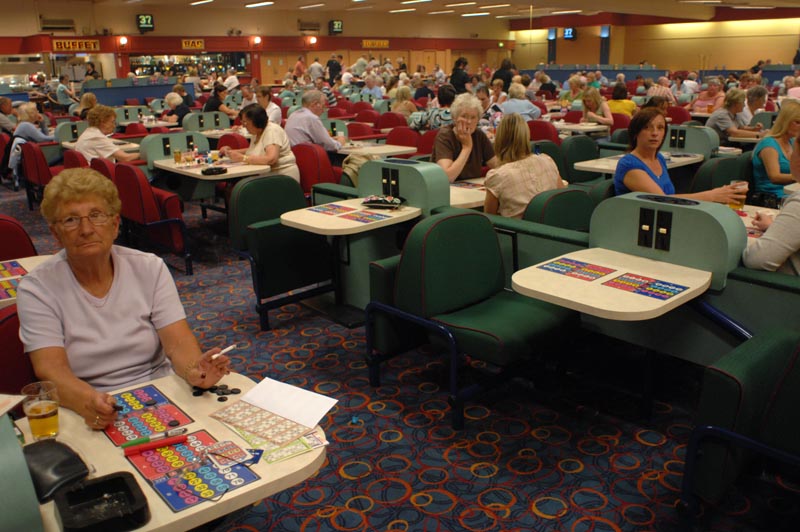
Shot entirely in Liverpool, it shows female Scousers enjoying a beverage.
Entering boss including bars Alma de Cuba, the Blob, Globe and Walkabout, the project was first shown in Liverpool as part of the Look2011 festival.
It goes to London’s Photomonth Festival October. The venue is Oxford House in Bethnal Green.
The show – Control – is being put on by (almost) the same nine photographers who took over the Baltic Warehouse in Liverpool earlier this year. This is the Control website.
The special preview show is Thursday, October 6, from 6pm. You're very welcome to come along. The show runs for approximately one month.
And you can read more about Women and Alcohol – and see more images – over at gazcook.com