Thursday, October 04, 2007

Oh Vienna.. and Austria and other photographic experiences


So there I was, after three incredible days of travel, food and booze, slumped in a chair in the hotel foyer.
It was 1.30 in the afternoon, I had been drinking until seven that morning. I still felt delerious and exhausted.
My eyes were closed, as my Mp3 player pumped out songs into my sore head.
When I opened them momentarily, she was there. Sitting at the next table across from me. Waving and smiling. Blonde hair, short dress, thick make-up. I was about to get propositioned by a high-class prostitute.*
Very quickly Andrea told me that she was a psychologist, health worker, actress and singer, and possibly a few other things I can't remember. She said she owned one-ninth of a huge potato farm in Austria and had slept with two men the previous day, one of which was her best-ever lover.
I promise you I am not making any of this up.
She also quizzed me about whether I thought the two pensioners sitting near us were feeling horny, if I liked 'f***ing' (she did) and allowed me try on her blonde wig.
By the time Robert, the little Irishman, joined me, she was roaring with laughter as she sang seductive love songs to us.
It goes on… when I told her what I did for a living she asked me to photograph her as she smoked (an added bonus) and also proceeded to stand up, lift her leg onto the chair and say 'is this a bit sexy?' He skirt also had a nasty habit of rolling up to the top of her legs as she sat. We made our excuses and left.
Abiding memory of Austria, probably not, but meeting this woman is certainly not an encounter I'll forget in a hurry.
My four days in Klagenfurt and Vienna was as good a trip as I've ever had. The scenery, the architecture, the hospitality, the nightlife. First class all the way.
Now, obviously, this was a press trip (I was working for the Daily Star) and the Austrian tourist employees could not do enough to make sure we had the perfect trip, from the best restaurants and five star hotels to the use of the Rapid Vienna team coach and the dutiful company of the tour guides as we drank until it was morning. The bike ride was something special, too.
But the country bowled me over in spite of that. It was the scenery and clean air in Klagenfurt, it was the awesome architecture of Vienna (by far the most beautiful European city I have visited so far). It was amazing.
NOTE: I would like to apologise to Andrea if my assumption is incorrect and she is not a prostitute (but I think she was).

Manchester United 1 - 0 Sunderland


I'm in the Daily Star offices in Broughton, near Preston, on Saturday as Louis Saha scored a 72nd-minute goal at Old Trafford 35 miles away.
There was never going to be any coming back from that for Sunderland. Ten-minutes before the end, at about 7pm, I was told I could leave for the night. So off I raced to Manchester for what should be my last summer night out taking photographs of people smoking.
Forty-odd minutes later I was on Oldham Street. I had about half an hour of light (ISO 500) before the flash came out.
A Manchester United fan walked past me wrestling the biggest beef burger I've ever seen. 'What was the score?' I asked. '1-0', she said, adding, 'You don't have to look so pleased'. She knew who I supported.
Piccadilly was splattered with Manchester United and Sunderland fans. There is a real European feel to the streets of Manchester these days, so unlike a decade ago.
I was not expecting much joy from Deansgate where all the posh bars have street tables and chairs. I got a couple of negative responses before things started to take off. People were watching and listening as I persuaded one table to allow me to photograph them. Then, as I left, it was 'aren't you going to photograph us?' I kept getting stopped by more people.
There are a lot of bouncers outside the Deansgate bars and quite a few wanted to know what I was doing, but none stopped me photographing.
It was the same story down Oxford Road. The moshers and the hen parties were only too happy to oblige. I photographed a friendly transsexual on Canal Street. One for the family album.
After a stop off in a pub Walkden, Worsely for a quick drink with a friend, it was back up the M61 to Preston.
Two targets here: the smokers section of Lava Ignite nightclub (Tokyo Jo's to me) and outside Squires nightclub where the smokers have a rather exposed pen. I was denied photographing here as the manageress (who has been supportive in the past) was off and her deputy said I needed her permission.
Strictly speaking this is not true as the smokers pen is on the street, but it's silly to do these things without co-operation. One for next time.
But it was mental in the smokers area of Lava Ignite where the punters have to queue to get in (or should that be outside). The 6ft by 12 ft walled in area was packed.
It got a bit mental. It was around 1pm and people were much more drunk than when I normally catch them 8pm or 9pm. There were a lot of requests for me to take photographs without the people knowing what I was doing. Things were going a bit fast and noisy to discuss the social issues of smoking. I took the pictures up anyway (they'll go on flickr so they can get hold of them, cigarettes or not).
In the Old Dog Inn got talking to a rather delightful couple who attend fetish nights in Preston. Had no idea there was one held in Bitter Suite. Sounded very interesting. 'They are,' she said, 'especially in the dark corners.' 'Can I come along?' I asked. She nodded. 'Can I take photographs?' 'You'll get your throat cut', she replied. I'll take that as a no.
My smoking project now slows down. I'm targeting office and factory workers now. But I will be out around the pubs when it's raining to capture the huddled-in-doorway shots.
Pray for rain.

Tuesday, September 04, 2007

Term 3 progress or Smoking With The Public


It’s the first week of September and Term 3 has been in full swing for six weeks, except it hasn’t really started.

We don’t go back in the classroom for another two weeks but my camera has been excessively clicking away.

It’s getting to the point where I’m dreading the editing process. I have so many files on my hard drive that it’s 500gb is now full. I need to do some serious pruning.

In recent weeks I’ve been to Preston, Blackpool, Manchester and Liverpool, all the time roaming for smokers. It’s a strange existence.

I think I have been right in going for lots of flash and an almost snap shot approach. Attention spans of the drunk can be very short, I’m taking over 200 pictures a night and, of course, it’s dark.

There are some amazing photographs of smokers knocking about (I can think of my colleague Caroline Edge’s photograph of the pregnant smoker as an example) but mine lack artistic merit, especially indoors or at night. Instead I hope the vivid colours and harsh light will give a brash reality to my photographs. These pictures are not about seduction.

I noticed in my research how some photographers, if not all, had produced smoke-related photographs of beauty. To me, this was done for no other reason than juxtaposition; showing something so dirty as a cigarette as a thing of beauty. I can see why they did, photographs work best if they show a contrast, even more so if it includes irony. But do they mean anything beyond their basic cleverness? Not really. Not in my opinion anyway.

Some people look stupid in my photographs. Is that my fault? It’s not deliberate – but these pictures just happen to be the best photographs.

I also worry about too much posing. Ask a drunk person if you can take his photograph and all of a sudden his 15 friends appear for the group shop you didn’t want. But this is what happens. I think these pictures will say as much about alcohol as they do about smoking.

I’ve also seen more mooning men’s arses than I would care to. Why do some people understand ‘take your photograph’ as ‘drop trousers and pull a moony’? And it’s never the women either.

My only regret is that I didn’t take more ‘Before’ photographs, before the ban came in on July 1. I’ve probably got 10 times more ‘After’ snaps now, and I’m still not finished. My main area left to document is workers on their breaks – or should that be workers reluctant to have their photograph taken on their breaks.

I have used my 60mm macro lens and ringflash only sparingly, preferring close-ups with a conventional flash and wide-angle lens. It just takes too long to change when your picture can just walk away. I’ve also been less than impressed with my Nikon wide-angle lens compared to my (broken) Sigma wide-angle, but more on that later.

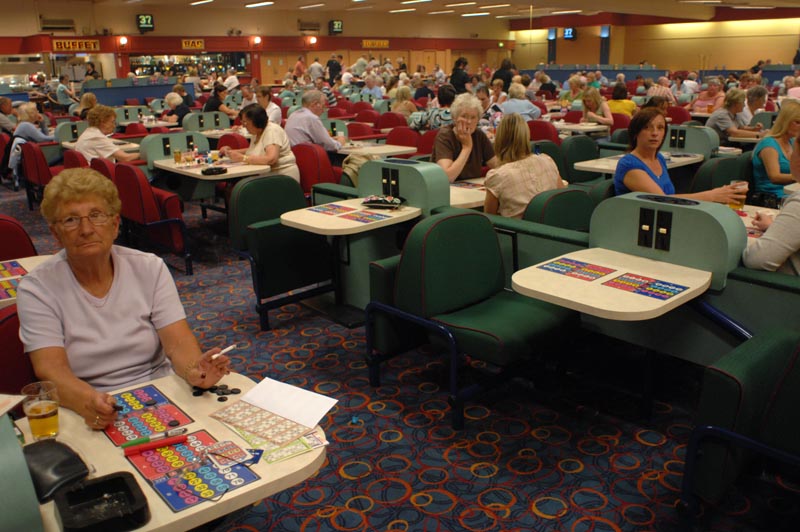
Some of my early shots indoors were very experimental, often using a 150mm macro lens. I love the quality of these pictures but they give such a tight crop that the context of the room, be it a bingo hall or a pub, is lost. While I will use tight detail shots, they are more for variation – not what the nitty-gritty of the project is all about.

Wednesday, August 29, 2007

Term 3


The start to Term 3 came as a bit of a shock, coming just seven days after the end of Term 2.

This was done to allow us students the entire summer to carry out our project until we begin checking in at Chadwick in mid-September. But in reality it meant another double presentation just a week after the last one.

Throw in a deadline for the 3,000 word essay and you've got a pretty cramped schedule. Toploading I think the Yanks call it. Either way, it was busy.

Still, moaning is for losers and it was just a case of getting on with it. I was quite surprised at how many people did actually turn up, thought there would be more duckers who failed to prepare properly.

Well, to be totally honest, some of the presentations were limited to say the least. Each presentation had to consist of your book project (carrying on either your travel or social issues project from Term 2) and your essay proposal. A few of the students went light on the essay part of the presentation. Mine was not brilliant.

Still, I got the message across. For my essay I'm pursuing the Before and After theme, with the hypothesis that Before and After photography is manipulative and only exists as a sales technique. It's a topic I'll have to shrink before I actually write the 5,000 word essay.

My book project will, of course, be Smoking In Public, for which I have trawled the towns and cities of Manchester, Liverpool, Preston and Blackpool.

Sunday, July 22, 2007

Term 2


And we thought things would get easier from now on. No more Thursday night meetings. No more quick deadlines.

Term 2 of this Photo MA was not quite what I’d been expecting. Without the single picture assignments – and effectively just two 10-image projects to carry out – it seemed like there was all the time in the world to do it.

Having just completed Term 2, I can tell you that it’s been fast and furious.

The mission was to complete devise and present both a social issues and travel project, complete them and then present the finished work to our fellow students.

For the record, my chosen projects were Smoking in Public (centred around the time of England’s July 1 ban) and Photograph a European City on a £200 Budget. Self-explanatory really.

My fellow students came up with a wide and varied list of ideas for their projects. Some, it has to be said, were so wide or vaguely varied that they were unable to be completed.

To me, that was part of the process. Coming up with and budgeting for a project that sticks within the boundaries achievability is crucial. Or, to put it another way – don’t get carried away with the fairies.

Unless you’ve got prior experience, the budget proposal is tough. It is a theoretical budget, but you are doing it as id you were attempting to get funding from a funding body. So, a project which is essentially costing you very little has to be proposed using fantasy figures of £5,000 or £10,000.

In that respect, my presentation was not the best, but when it came to presenting the finished work I had it in the bag (or in print and on a website as the course demanded). There was more squirming and excusing than I expected from others who had not pulled off their proposal.

This was for various reasons, some out of the students’ hands. Proposals that failed to come to fruition were: a three-week train journey across Siberia, a participatory project of passenger son London buses; a photo-essay on the US Army base at Menwith Hill; and a project by a student whose excuse about it not being done was so long that I fell asleep before he told us what it was. But credit to these people for doing something else and/or turning up.

That said, there were some tough proposals that had been successfully carried out too. The Yorkshire pot ash mine was a good one, also the essay on the civil war in Cyprus, American ghost towns and the women who have breast reconstruction surgery.

But the warning is, kids: Don’t get over ambitious.

Like it says in The Bible – keep it real.

Saturday, May 26, 2007

Assignment 8


ASSIGNMENT 8: You are required to consider what is unique about the images you take within your own community and produce a "sellable" image that is unlikely to have been considered by a visiting photographer from outside your region/country. In attempting this assignment you should engage with the issue of local photographer V visiting photographer and consider the issue of fair trade photography. As part of this you should look at Memat as a means of fair trade distribution of photography and ask the question whether you think this system is a potential solution to allow local photographers to represent their own communities.

Bit of a technical pass, this one. The point I'm making is that prior permission has be obtained to photograph this fine concrete monolith. Hence you can't just turn up and photograph it. Well you can, if you don't get caught.

Obviously I've photographed Preston Bus Station and Car Park before, so I have written permission already.

The other part of this assignment is to make the picture look appealing - sellable. So what I've done, and this is a good trick this, is tilted my camera to an extreme angle and used the sweeping lines to please the eye. Between me, you and the gatepost, this adds impact to an image. Interesting point that, take note.

Friday, May 25, 2007

Assignment 8


ASSIGNMENT 8: You are required to consider what is unique about the images you take within your own community and produce a "sellable" image that is unlikely to have been considered by a visiting photographer from outside your region/country. In attempting this assignment you should engage with the issue of local photographer V visiting photographer and consider the issue of fair trade photography. As part of this you should look at Memat as a means of fair trade distribution of photography and ask the question whether you think this system is a potential solution to allow local photographers to represent their own communities.

Bit of a technical pass, this one. The point I'm making is that prior permission has be obtained to photograph this fine concrete monolith. Hence you can't just turn up and photograph it. Well you can, if you don't get caught.

Obviously I've photographed Preston Bus Station and Car Park before, so I have written permission already.

The other part of this assignment is to make the picture look appealing - sellable. So what I've done, and this is a good trick this, is tilted my camera to an extreme angle and used the sweeping lines to please the eye. Between me, you and the gatepost, this adds impact to an image. Interesting point that, take note.

Saturday, March 31, 2007

Assignment 7


Assignment: Produce a single image on the subject of Cast Away. Your picture should be designed to give a sense of tranquillity and peace away from the hustle of city life. The picture is aimed at Conde Nast Traveller magazine and should be accompanied by a caption that will be understood by a broad international readership.

There was a heated debate in our seminar this week about the type of image required for this assignment and whether a less obvious image would work.

By ‘less obvious’ I mean a photograph which fails to meet the brief, would never be used by a travel magazine editor and which is supposed to make the viewer think deeply about some kind of suggested hidden meaning. Can you guess which side of the fence I was sitting on?

There was a feeling of hysteria in the class as several otherwise normal people decided a magazine is needed that uses abstract imagery to suggest a holiday landscape where the reader must use their brains to think. Suddenly everyone’s a magazine editor.

Thinking of doing this course? Prepare yourself to be smacked around the face by intellectualism.

If such a magazine did exist it wouldn’t sell many copies. It would fold very quickly. That’s the harsh reality. It was a good, polarising discussion though, even if it was poppycock.

Anyhow, my image for this assignment attempted to show a man escaping city life in a quite literal way. The weather form the top of Sunnyhurst Tower in Darwen, Lancashire, meant that this photograph would never make it on to the pages to Conde Nast Traveller. But neither would Darwen, Lancashire.

Dyer Traits

A bit about Geoff Dyer (and it’s a bit long, so hang on in there).

Geoff Dyer is a kind of theorist. He theorises on photographs. This is my theory on him.

Total boll ocks. Nice fella like, but his ideas were built on pointless theory and scandalous assumption.

He gave a nice lecture. If you like hats. Or jazz. Or white fences. He didn’t take his coat off either. The whole afternoon was strange,

I know it’s difficult to believe that a serious theorist could keep a straight face for an hour as he talked about his analysis of 1920s photography through images with hats in them, but Geoff managed it.

I have to admit I sat there in disbelief for most of the talk. Can you really have an intellectual, photography-based discussion on hats? Evidently, yes.

In my opinion Geoff, who does not take photographs himself, used a great deal of unfounded interpretation of photographs, garnished with a smattering of rhetoric.

It all came to a head when he spoke about one photographer who had taken a picture of a white fence. Geoff claimed the photographer had obviously referenced some previous images of white fences in some cultural tribute. He even wrote in his book.

But the photographer told Geoff this was, in fact, clap trap. He liked the white fence, he took a photo of it.

If ever there was proof needed that over analysis yields pointless theories, this was it. Geoff still writes his books.

He listened a lot in the lecture. So intently was he listening, in fact, that I am convinced we gave him the idea for his next book. ‘If brown is the new black,’ one student asked, ‘what is the new hat?’ Now there’s a Geoff Dyer lecture to miss next year.

Good luck to him, he probably earned more money for that lecture than I take home in a week. And a few of my fellow students stuck up for him. But is he really contributing to the discussion? He is, if you like pointless discussion. Well if the hat fits...

NOTE: The worrying thing is this: I would never have taken a photograph of a white fence but might be tempted to now after Geoff’s lecture. I have been made aware of pointless white fences in photography. My mind has been poisoned. Geoff Dyer has poisoned my mind.

Thursday, March 22, 2007

The nightmare that turned into a bad dream

There are those on this course, not least the lecturers, who are not happy with its organisation.

The Virtual Learning Environment for our photography MA is quite a funky little thing if you ignore all the broken links. You get all your assignment information, reading guides and timetables in one place, plus all the news from the students studying in China. And that’s part of the problem.

The course is run by a British man called Dave Clarke who lives in Dalian where the course is run simultaneously with Bolton’s. Why is that? Well, I’ve only heard in whispers that it’s because Clark likes living there. Other than that, there’s no reason for the link.

Problem is there has been several communication problems. This culminated in a rather heated debate in Bolton’s main lecture theatre on the Chadwick Campus last Thursday (March 15) because our most recent assignment, number 7, was totally cocked-up. There were two different tasks (see assignment 7 notes).

It has become increasingly obvious over recent weeks that both Ian Beesley and his assistant Terry Speake are very disillusioned with the management issues between here and Dalian.

They have tried to hide it from us, Ian even advising some students against emailing Clarke directly, but when half the seminar is spent ironing out confusion over course direction, frustrations come to the fore.

One of the students even revealed he had considered turning down the invitation to join the course because of the feedback he got from other academics within the industry. ‘It’s getting better,’ said Ian, ‘last year was a nightmare, now it’s just a bad dream.’

Personally I couldn’t give a toss what problems they’re having between here and China. There are a few little problems but the course is run well in Bolton, perhaps it should be run entirely from Bolton. However, if the students in Bolton is being told or emailed one thing, while the VLE postings say something entirely different it is not good. The students carry out the wrong assignments, the lectures look clueless.

I feel Ian is desperate not to antagonise Clarke, but how long he will diplomatically put up with these kinds of problems as a self-confessed tell-it-like-it-is man I don’t know.

Should I be writing this now? Well, as a firm believer that blogs are nothing more than never read diaries, I don’t think it’ll make any difference.

Nobody knows about this bog on my course. It is written as a diary which could possibly be read by a prospective student on the course. That’s the only value I see in it; showing what goes on. It could give them something to talk about when they meet Ian for their application interview. One thing I will say is I’m loving the course, I’m sure others will too.

If Dave Clarke should read this, I don’t think he’ll have too much cause for complaint.* I’m sure he’s aware of the complaints already. We’ll see if I get pulled up about it.

If I do I’ll say: ‘Freedom of speech, tell it like it is’. Much like Ian Beesley.

*If you do complain, please me reference using the Harvard citation system.