Wednesday, November 28, 2012

This is Palestine

This was not the trip I was expecting. Experience Palestine during National Youth Week, the email said.

So, after less than two hours sleep, after losing several journalists at airport immigration, after being taken to the wrong hotel where I am now staying in an apartment with a married Italian and Canadian couple and after killing a dog on the two-hour coach journey to Ramallah, how come I have ended up standing in front of reels of barbed wire watching international activists spray-paint a huge concrete wall which separates this desolate part of Palestine from the Israeli settlement beyond it?

Our Palestinian guide on this magical mystery tour, who has just been shouting at us to spray ‘Free Palestine’ in as many different languages as are present in our entourage, is now slightly more alarmist as he bellows: “Ten minutes, ten minutes. You must be quick. We can’t be here for more than ten minutes, the Israeli army is watching us. They will be here in ten minutes.”

This is the start of my five days in Palestine, which coincided with – some say sparked – the November 2012 conflict between Israel and Gaza.

A story of tears and tear gas across a nation where there are no youths in National Youth Week.


Palestiniana will be released on Kindle soon.


Save Whalley Village Action Group protest


A lot of people in Whalley don't want new houses in the village. 
The reasons are obvious: roads are already clogged while the school has had to place some pupils in a higher year group to cater for increased class sizes from the Calderstones estate.
For the proposed 116-home development in a floodplain field next to the A59 fly-over on Mitton Road, residents held a protest. I took the photographs.
Star of the show was Mitton Road's Karen Czapowski (above).
Whalley royalty was also in attendance - Sheena Byrom OBE attended. Ribble Valley MP Nigel Evans also came along.


The story made the front page of Clitheroe Advertiser and Times.

Monday, October 29, 2012

Good/bad websites #001

[gallery]BAD WEBSITE
The Telegraph
Slideshows have to be manually clicked on. To see each new photo, the page requires a reload – THIS IS VERY BAD. Actual image selection is very good but it takes too long to view them.

Garry_cook_telegraph_website

NOTE: This is the first in a series of irregular reviews of websites displaying photography. Imagery is crucial to websites and some display them better than others. Some, sadly, display photography in such a way that it is too much hastle trying to view them. This is bad. Many photographer's websites fall into this category. THIS IS VERY BAD. Let's put a stop to it.

Sunday, September 23, 2012

Communities procession at Preston Guild 2012

[gallery]
2012_sept_7_comm_procession_592
The communities procession of the 2012 Preston Guild was the third of four processions. Most schools in Preston, and including Penwortham, had the day off to allow children to take part. It was held on Friday, September 7.
2012_sept_7_comm_procession_347
2012_sept_7_comm_procession_545
2012_sept_7_comm_procession_460
2012_sept_7_comm_procession_549
2012_sept_7_comm_procession_477
2012_sept_7_comm_procession_523
2012_sept_7_comm_procession_489
2012_sept_7_comm_procession_531
2012_sept_7_comm_procession_483
2012_sept_7_comm_procession_446
2012_sept_7_comm_procession_432
2012_sept_7_comm_procession_429
2012_sept_7_comm_procession_442
2012_sept_7_comm_procession_320
2012_sept_7_comm_procession_415

Friday, September 21, 2012

Wednesday, September 12, 2012

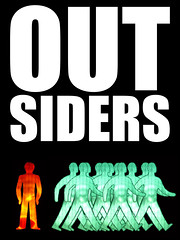
Outsiders, Interactive Newsprint, Fieldguide, Brompton Design District, London Design Festival. Or to make it simpler, some of my images are involved in a paper technology experiment in London from Monday September 17

[gallery]
Yes, I know it's a lot to take in. Briefly the Interactive Newsprint (IN) project is displaying its prototype designs - including some of my images – at London Design Festival (Sept 14 to 23, 2012).

The images include printed buttons which play back various pieces of audio. The paper is also connected to the internet via wi-fi. It's very exciting.

If you want to go along and see it and other amazing examples of the groundbreaking technology, it is at 4 Cromwell Place, just up from South Kensington tube station and just down from the Natural History Museum and V&A.

I wrote about IN a previous blog. And here is the website for Brompton Design District.

The London Design Festival is rather amazing and anybody interested in innovation will love it.

If you've gotten this far and are still interested, here are some words sent to my by the Brompton people about what's going on at Cromwell Place:

For London Design Festival, Fieldguide has brought together a diverse mix of designers, technologists, artists, musicians and journalists to show some of their most exciting work from the last year. These projects, prototypes and products will demonstrate how insight journalism can be used as a tool for design research, how paper can connect to the internet and how design can be used to speculate on a physical digital society.

The exhibition features new work from Brendan Dawes, author of the inspirational book “Analog in, Digital Out” which collected his thoughts on interaction design and featured amongst other things: books wrapped in brown paper, bits of code, cheese, hardware hacks, Play-Doh and stories of origami swans left on trains. For London Design Festival he’s collaborating with Bare Conductive, electrically conductive materials pioneers, to create a new version of his Happiness Machine, an Internet connected printer that prints random happy thoughts by random people from across the web. 

Alongside Brendan will be #UNRAVEL, a collaboration by FOUND, best known for Cybraphon their BAFTA-winning ‘Autonomous Emotional Robot Band’ and Aidan Moffat, the Glasgow-based author and musician formerly of the seminal band Arab Strap. The interactive sound installation encourages people to unravel the truth about The Narrator’s life by playing records from his collection. Each 7” record represents a different memory, but unlike conventional vinyl recordings they sound different each time they are played. The memories embodied in the installation will distort, evolve and warp depending on external influences: the time of day, the size of #UNRAVEL’s audience, the local weather, and what people are writing about the installation on twitter from moment to moment. 

The exhibition will also include work from design consultancy Uniform, design provocateur Patrick Stevenson-Keating, and design researchers Product Research Studio as well as feature work from two groundbreaking collaborative research projects funded by Nesta and the Digital Economy programme from Research Councils UK that pioneer the use of insight journalism to uncover the potential of digital R&D in the cultural sector and explore how newspapers can harness the potential of printed electronics.

The end. Well done.

Tuesday, September 04, 2012

Third Proclamation and Trades Procession

This was the Third Proclamation at the 2012 Preston Guild, plus the Trades Procession which followed shortly afterwards.

Dsc_0056
Dsc_0070
Dsc_0089
Dsc_0068

Dsc_0101
Dsc_0185_1
Dsc_0118
Dsc_0138
Dsc_0187_1
Dsc_0236_1

Tuesday, August 28, 2012

Outsiders at London Design Festival with Interactive Newsprint

[gallery]

This pioneering technology, used for the first time with any form of photography, is part of the Interactive Newsprint project, led by the University of Central Lancashire in Preston.

I’ve tried to work out the best way to describe what Interactive Newsprint is.

The best I can come up with is through these two definitions.

OUTLANDISH: Interactive Newsprint is internet-connected paper on which microphones, speakers, buttons, LED displays and moving images can be printed with specialist ink.

SCEPTICAL: Interactive Newsprint will be limited to novelty-value gimmicks on expensive paper, an unnecessary piece of technology to sit alongside more robust media devices like tablets and smartphones.


The truth is somewhere in the middle. It will take some time and major technology developments for the paper to fulfil this outlandish definition.

Already, Interactive Newsprint is an internet-connected paper allowing an increased evel of interactivity between the user and the writer/advertiser. This includes instantly updateable audio
But the development of some of these outlandish technologies – perhaps a printed battery, a printed solar power source or printed moving images – will move a step closer with this project.

And that’s the beauty of this project, the possibilities Interactive Newsprint (IN) could lead to. The product currently is wi-fi enabled and uses circuits made of printed ink (though I’m not sure how far the printed circuits will be developed in the prototypes).

Technologists believe that eventually moving LCD images will be cheaply printed on to paper and other products, such as drinks bottles or crockery.

Designers hope that by developing IN they will enable new ways to fund content, a crucial development if any kind of print industry is to remain in years to come. Music could also be a key element for IN’s progression.

As we approach the fall of 2012, IN is a prototype which has been seen at SXSW in Austin Texas and is about to unveil its latest designs at the London Design Festival (in September 2012).

Several community, news and arts-based groups are helping develop the technology.

As part of the development my own Outsiders project is being used for IN, with three of the interviews from the book printed on to the paper.

The interactivity comes from embossed buttons on the images which, when pressed, play either audio from those interviewed, my own thoughts and views on the subject or opinions from those who have experienced the IN paper at the deign festival.

My personal favourite possibility is a localised paper with an advert from the local butcher, who can update the embedded audio in the advert at any time to tell customers of special offers or that he is closing early because he has to take his son to football training.

For photography, the project is a unique way of engaging viewers and we hope to develop this arts-based approach to the newsprint as the project continues.

NOTE: IN is funded by the Digital Economy (DE) Programme and led by the University of Central Lancashire, with technology company Novalia and Dundee and Surrey universities.

More details on IN at the London Design Festival will be announced soon. 

Monday, August 20, 2012

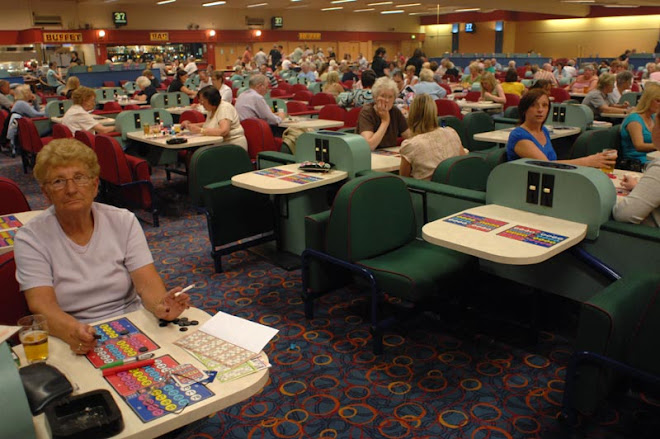
Marlboro Nights, Come To Where The Smoking Was (looking back at the ban on smoking in public)

[gallery]My six-week exhibition at The Continetal in Preston has just come to an end.

Marlboro Nights the exhibition marked the fifth anniversary of the ban on smoking in public in public in England (July 1, 2007).

Marlboro Nights the book is availble now on Amazon in the UK and the US.

This big brash book documents smokers before the ban and then follows them as they were forced to go outside. Some of the portraits can be found elsewhere on this blog (or on www.gazcook.com where you can buy a signed copy from the store), below are some lovely landscape shots.

Garry_cook_smoking_028
Garry_cook_smoking_005
Garry_cook_smoking_010
Garry_cook_smoking_019
Garry_cook_smoking_021
Garry_cook_smoking_030
Garry_cook_smoking_031

NOTE:

Smoking_kills2
Newer Posts Older Posts Home